A lawn is often treated as the leftover space in a garden. The beds, paving and trees get planned, and whatever is left becomes grass.
That approach can work, but it rarely looks its best. A lawn is one of the largest surfaces in most backyards, so its shape and position shape the whole design.
Planning the lawn with the same care as a deck or a kitchen gives you a garden that looks better and is easier to look after.
Getting the base right is part of good design. The Lawncare Man is a Perth lawn care business that installs new lawns and repairs worn areas, starting with ground preparation and advice on the right grass for each site.
This post looks at lawn design from a designer’s point of view. Shape, edges, light, use and upkeep.
Start with how you will use it
Before you sketch anything, think about what the lawn is for.
A family with young kids needs open space for running and ball games. A couple who entertain may want a neat green panel that frames an outdoor dining area. A dog owner needs grass that can handle wear.
Each of these leads to a different size and shape.
Ask yourself:
- Who will use the lawn most, and for what?
- Do you need one large open area or a few smaller spaces?
- Will it be seen mainly from inside the house?
- How much time do you want to spend mowing and edging?
There is no point designing a huge sweep of grass if nobody uses it and someone has to mow it every week.
Shape sets the mood
Lawn shape has a strong effect on the style of a garden.
Straight lines and rectangles feel modern and formal. They suit contemporary homes, clean paving and simple planting.
Soft curves feel relaxed and natural. They suit cottage gardens, native planting and older homes.
A circle or oval can create a focal point, especially in a small courtyard. It draws the eye to the centre and makes the space feel planned.
Whatever shape you choose, keep it simple. Lots of small curves and narrow strips look busy and are hard to mow.
Edges make the difference
A crisp edge is what makes a lawn look designed rather than accidental.
There are several options:
- Steel edging gives a thin, clean line that suits modern gardens
- Brick or stone edging adds texture and doubles as a mowing strip
- Concrete kerbing is durable and keeps grass out of beds
- A simple cut edge is cheap but needs regular trimming
Mowing strips are worth thinking about. A flat edge the mower wheel can run along saves a lot of trimming by hand.
Work with the light
Grass needs sun. Most lawn types struggle in deep shade.
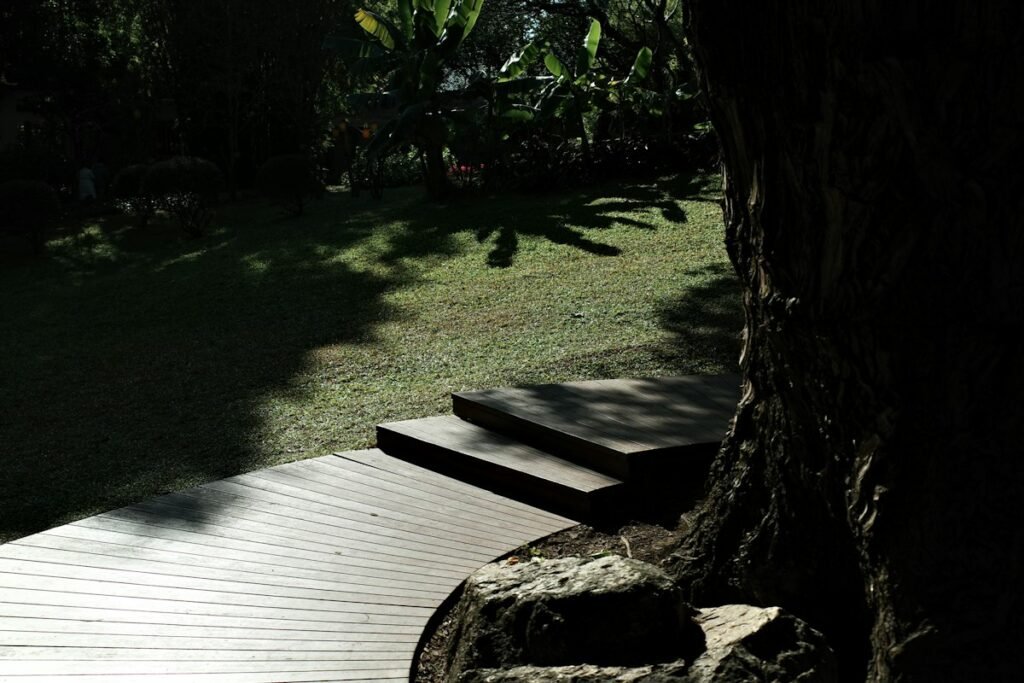
Before you set the lawn’s position, watch how light moves across your yard over a day. Note where trees, fences and the house cast shade, and how this changes between summer and winter.
If one corner gets very little sun, it may not be the right place for grass. Paving, a gravel area, a seat or shade-loving plants might suit it better.
A good lawn installer will look at shade and other site issues before laying turf. Picking a grass suited to the light saves a lot of frustration later.
Choose the right grass
Different grasses look and feel different. Some are soft and fine. Some are hard-wearing. Some handle heat and dry weather well, while others cope better with partial shade.
The colour also varies. Some lawns are a deep green and others are lighter or more blue toned.
Talk to a lawn care provider about which species suits your site, your climate and how you plan to use the space. The right choice is part of the design.
Preparation is part of the design
You can draw a beautiful lawn on paper, but it will only look good if the ground under it is right.
Good preparation usually involves:
- Removing old turf and decaying organic matter
- Re-levelling the ground so water drains evenly
- Adding soil improvers before the new turf goes down
- Laying the turf carefully with tight joins
Uneven ground shows up as patchy growth and puddles. Poor soil shows up as weak grass that struggles in hot weather.
Spending a bit more time on preparation means the lawn holds its shape and colour for longer.
Think about paths and wear
People take the shortest path. If there is a natural route across your lawn, from the back door to the clothesline or the shed, it will wear.
You can plan for this. Add stepping stones, a paved path or a gravel track along that route.
Areas near gates, side paths and play equipment also take heavy wear. A tougher grass or a small paved pad can help.
Plan the water
A lawn needs water to stay healthy, especially through summer.
Design the lawn so it can be watered evenly. Simple shapes are easier to cover with sprinklers. Narrow strips and odd corners often end up either dry or overwatered.
In Perth, it also helps to know the local watering rules. Water Corporation’s Waterwise garden hub has advice on soil, irrigation and designing a garden for the local climate.
Balance lawn with other surfaces
The best gardens use lawn as one part of a mix.
Paving gives you dry, hard space for furniture. Garden beds add height, colour and texture. Gravel and mulch fill awkward spots without needing water or mowing.
A lawn surrounded by well-planned beds looks fuller and more intentional. It also gives the eye a resting place among busier planting.
Repairs and refreshes
You do not always need to start from scratch.
If one part of the lawn has worn out, perhaps from kids, pets or a summer of hard use, that area can often be removed and replaced. It is a good chance to rethink the shape or edge at the same time.
Your lawn design checklist
Before you lay a single roll of turf, work through these points:
- Decide how the lawn will be used and by whom
- Pick a shape that suits the style of your home
- Choose an edge that makes mowing easy
- Map sun and shade across the day and the seasons
- Choose a grass that suits the light and the wear
- Plan proper ground preparation and levelling
- Add paths where people will walk anyway
- Make sure the lawn can be watered evenly
A well-designed lawn makes the whole garden feel finished. Plan it with care and it will look good for years.